 INNOVATIVE CUBE
AI in Healthcare: Revolutionizing Medicine and Patient Care
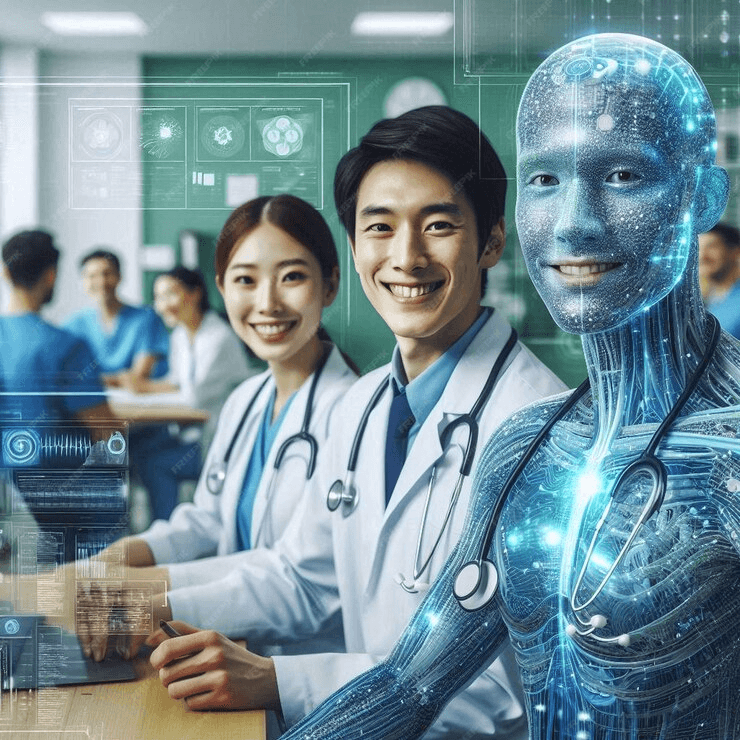
The future of healthcare is not just in the hands of doctors and nurses; it's in the algorithms and intelligent machines that work alongside them. Imagine a world where AI predicts illnesses before symptoms appear, customizes treatment plans for each patient, and helps doctors make faster, more accurate decisions. Welcome to the new era of AI in healthcare, where innovation meets compassion.
The Rise of AI in Healthcare
Artificial Intelligence (AI) is transforming industries worldwide, and healthcare is no exception. Over the past decade, advancements in AI have enabled the development of tools and systems that assist healthcare professionals, optimize medical procedures, and ultimately improve patient outcomes. From early diagnosis to personalized treatment plans and robotic surgeries, AI is making healthcare more efficient, accurate, and accessible.
How AI Works in Healthcare
AI in healthcare relies on machine learning algorithms and data analysis. These algorithms process vast amounts of medical data, such as patient records, medical images, and genetic information to detect patterns and make predictions. The more data the AI system is exposed to, the more accurate its predictions become. This continuous learning cycle allows AI to keep improving its performance, making it an invaluable asset in medicine.
Early Diagnosis and Disease Prediction
One of the most significant impacts of AI in healthcare is its ability to detect diseases early. AI systems can analyze medical images like X-rays and MRIs with high precision, spotting signs of diseases like cancer even before symptoms appear. For example, AI can detect lung cancer nodules more accurately than human radiologists, improving early detection and survival rates.
Beyond imaging, AI also analyzes a patient’s medical history and genetic data to predict their risk of developing conditions like heart disease or diabetes. These models help doctors offer preventive care and personalized recommendations, reducing the risk of serious health issues.
Personalized Treatment Plans
AI is transforming treatment with a personalized approach. By analyzing a patient’s genetic profile and health data, AI recommends tailored treatments. In oncology, for instance, it creates chemotherapy plans targeting specific tumor mutations, improving effectiveness and reducing side effects.
AI-Powered Robotic Surgeries
Robotic-assisted surgeries enhance precision and control in operations. AI-powered robotic systems perform delicate tasks beyond human capability. These systems learn from past surgeries, improving efficiency and minimizing complications, leading to faster patient recovery.
Virtual Health Assistants and Patient Monitoring
AI is enhancing home care through virtual health assistants and monitoring systems. These tools track vital signs and remind patients to take medications. AI wearables alert healthcare providers to abnormalities, ensuring timely interventions, especially for elderly patients and those with chronic conditions.